


Navratri dressing is about more than bright colors and elaborate embroidery. A Navratri lehenga choli can reflect regional traditions through its patterns, silhouette, mirror work, and playful movement, giving festive dressing a distinctly cultural character while still leaving room for personal styling.
The best outfits also need to work with the celebration itself. Garba involves constant movement, crowded dance circles, photographs, and long hours with family and friends. That makes proportion, construction, fabric weight, and secure styling just as important as the decorative details.
Let the Skirt Create the Drama
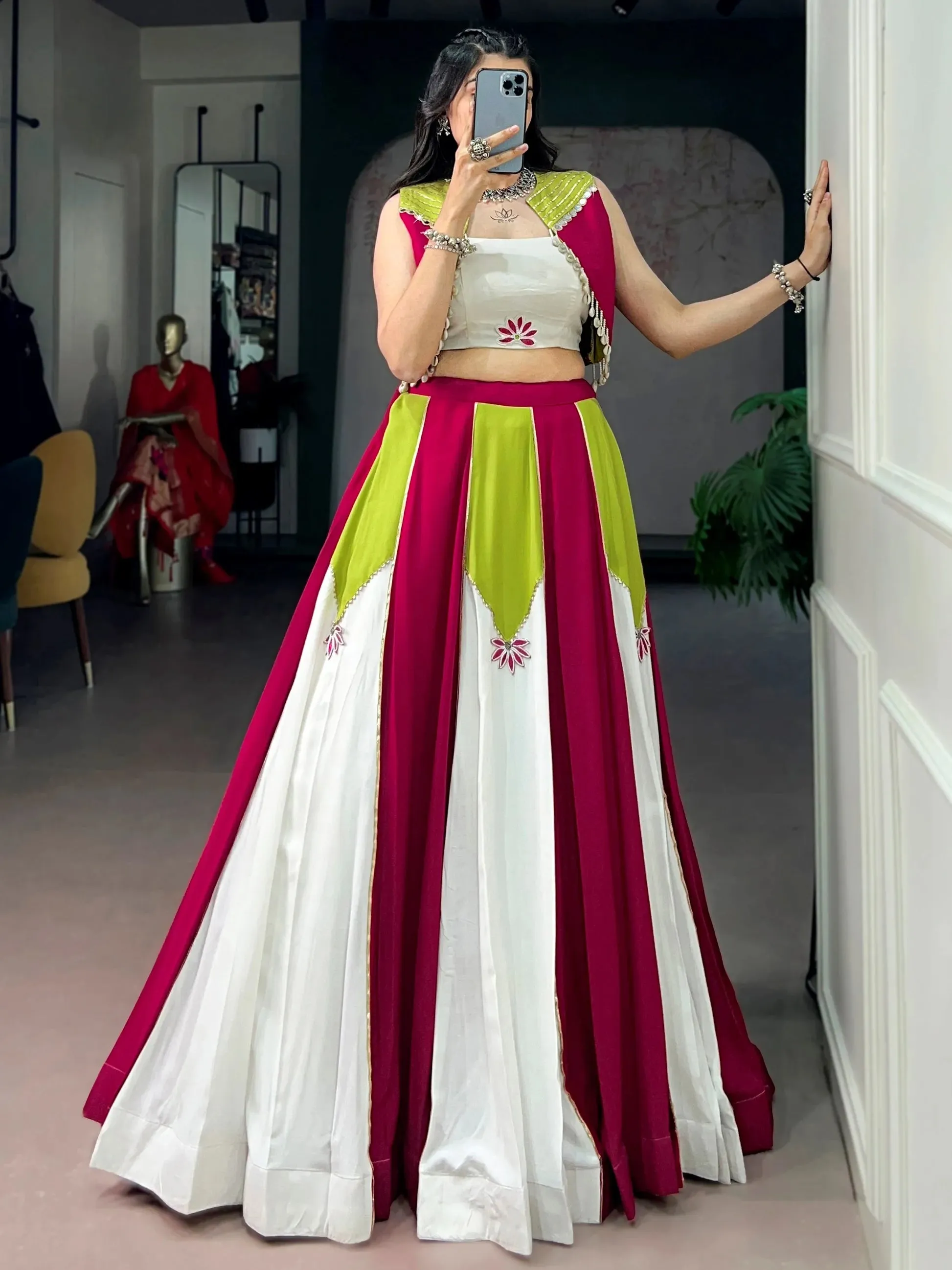
The skirt is naturally the center of attention in a traditional Navratri ensemble. Wide panels, colorful borders, layered sections, and carefully placed motifs can create movement without requiring excessive surface decoration. When the wearer turns or walks, these details become more noticeable and give the outfit its characteristic festive energy.
Different skirt shapes can create different effects. A fuller flare feels dramatic during dancing, while a moderate flare may be easier to manage in crowded spaces. The right choice depends on personal comfort as well as the type of celebration. A skirt should move freely without becoming difficult to control.
Use Craft Details With Intention
Traditional-inspired clothing often includes several decorative techniques at once, but combining everything can sometimes make an outfit look visually crowded. Mirror work, thread embroidery, appliqué, tassels, and colorful borders each have their own character and do not necessarily need equal prominence.
A more considered approach might include:
- One dominant decorative technique
- Contrasting borders around the skirt
- Small motifs across selected panels
- Limited embellishment on the blouse
This allows individual details to remain visible instead of blending into one another. It also keeps the outfit lighter, which can be useful during long evenings of dancing and socializing.
Move Beyond the Usual Color Pairings
Navratri provides plenty of scope for experimenting with color. Traditional combinations can be striking, but there is no need to restrict every outfit to the same familiar pairings. Unexpected combinations can make the ensemble feel more personal while retaining its festive character.
A deep blue skirt with warm embroidery, earthy tones with bright accents, or a softer pastel base with colorful detailing can all create different moods. The important thing is to give the colors some relationship through the border, blouse, or dupatta so the finished outfit feels deliberately coordinated rather than randomly assembled.
Dress for the Rhythm of Garba
A garba outfit for women needs to accommodate much more activity than an outfit intended only for sitting at a formal ceremony. The skirt should have enough room for movement, while the blouse should remain secure during repeated steps and turns. Heavy embellishment can also become tiring after several hours.
The practical side of the outfit deserves attention before the event begins. A secure waistband, manageable skirt length, comfortable blouse, and properly arranged dupatta can prevent constant adjustments. When these details are right, the wearer can concentrate on the celebration instead of worrying about the clothing throughout the evening.
Give the Blouse Its Own Identity
The blouse does not always have to repeat every design element found on the skirt. A contrasting neckline, textured sleeve, embroidered back, or different fabric can create an interesting relationship between the two pieces without making the ensemble feel disconnected.
Shorter blouses can emphasize the flare of the skirt, while slightly longer cuts can provide a more covered appearance. Sleeve length also changes the character of the outfit considerably. Instead of automatically choosing the most decorated blouse available, consider which details will complement the skirt and create a balanced overall silhouette.
Make the Dupatta Part of the Design
The dupatta can act as more than an additional layer. Its color, border, and placement can introduce contrast or connect separate elements of the outfit. A contrasting dupatta can make a relatively simple lehenga feel more expressive, while a matching one can create a more unified appearance.
For active celebrations, the drape should remain secure without hiding too much of the blouse or skirt. A lightweight dupatta with a defined border can be easier to manage than a heavily decorated piece. Styling it thoughtfully allows it to contribute to the outfit without becoming an obstacle during movement.
Choose Accessories That Reflect the Outfit
Jewelry can reinforce the regional character of Navratri clothing, but accessories should respond to the outfit rather than simply add more decoration. Oxidized jewelry, colorful bangles, earrings, or traditional-inspired pieces can work especially well with embroidered ensembles.
A useful balance is to consider the strongest feature of the outfit first. If the skirt contains detailed mirror work, statement earrings may be enough. If the clothing is relatively simple, layered bangles or a more noticeable necklace can add interest. Comfortable accessories are particularly important when the celebration involves dancing for several hours.
Conclusion
Navratri dressing becomes more interesting when traditional elements are given room to work alongside individual style. A well-planned lehenga can use color, craft details, proportion, and movement to create a festive appearance without relying on excessive decoration. Paying attention to the way each component works during an actual Garba celebration also makes the outfit more practical. The result is clothing that feels connected to tradition while still looking considered, personal, and fresh.